William Tyndale's Inspiration to Translate the Bible into English
The clink of plates echoed in the hall at Little Sodbury Manor in the English countryside. A young chaplain sat quietly among Gloucestershire clergy, listening to their conversation drift from politics to religion. Then a remark made him freeze, “We had better be without God’s laws than the Pope’s.”
The clink of plates echoed in the hall at Little Sodbury Manor in the English countryside. A young chaplain sat quietly among Gloucestershire clergy, listening to their conversation drift from politics to religion. Then a remark made him freeze:
“We had better be without God’s laws than the Pope’s.”
William Tyndale, barely in his late twenties, looked up and replied calmly, but resolutely:
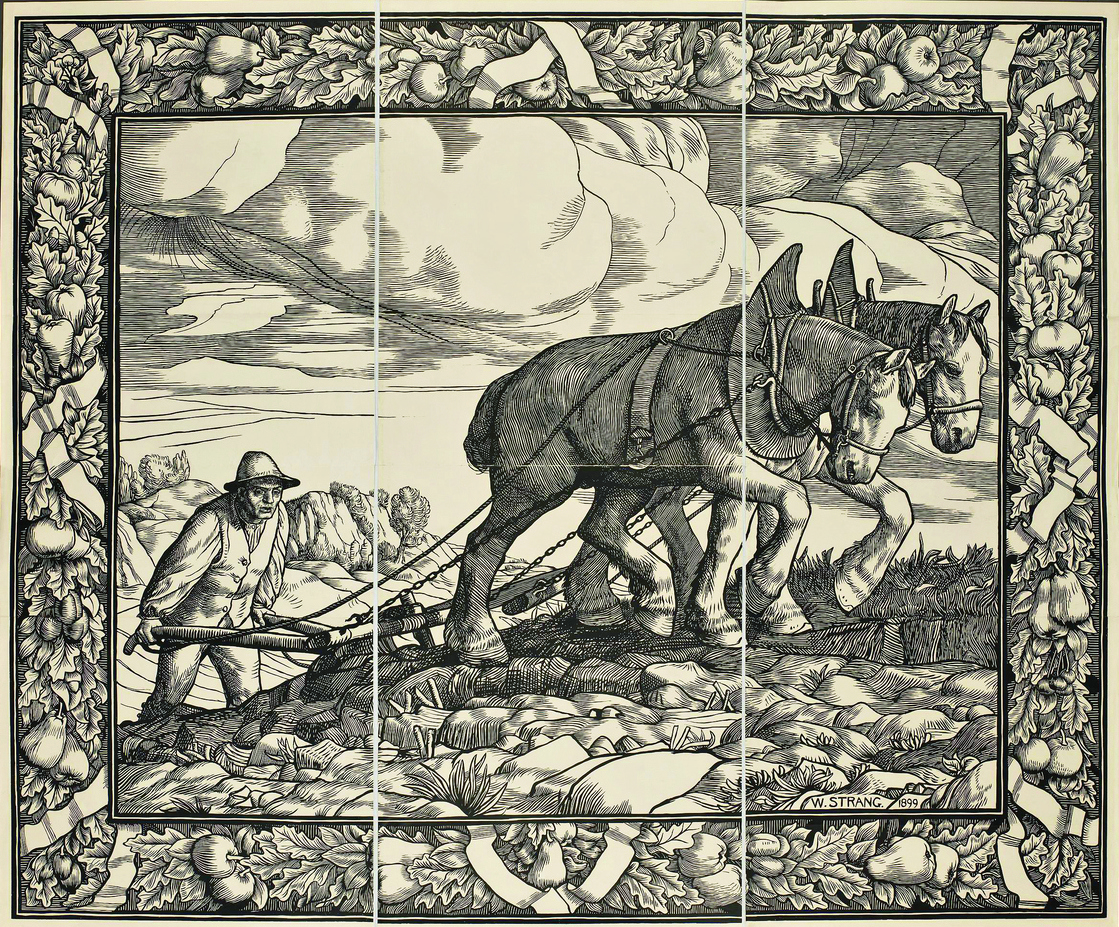
“I defy the Pope and all his laws, and if God spare my life, ere many years, I will cause a boy that driveth the plough to know more of the Scriptures than thou dost.”
It was a staggering declaration. In England, to translate or even read the Bible in English could brand you a heretic and send you to the flames.
Yet Tyndale’s words did not spring from nowhere. They were the cry of a man who had grown up in a land where the Bible was chained—not only to lecterns, but shut away from the hearts and minds of the people.
Public Domain
When Tyndale promised to give the Scriptures to a ploughboy, it was not romantic rhetoric. In his day, the idea of a farm labourer reading God’s Word for himself was radical — and illegal. It captured the heart of his mission: the Bible for every believer.
Gloucestershire roots
William Tyndale was born around 1494 in the lush Gloucestershire countryside in England, probably in the village of Stinchcombe near Dursley. He grew up among rolling hills, grazing sheep, and the market chatter of Dursley’s square. Just a short journey away was Bristol, one of England’s busiest ports—a connection that would later prove vital, when he used Bristol’s trade routes to smuggle English Bibles into the country hidden in bales of cloth.
The Tyndales were a respectable family, possibly with merchant ties. This afforded William something rare for a rural boy—the chance to be educated. He learned Latin grammar from an early age, memorised church prayers, and heard the Scriptures read aloud in the only authorised form: the Latin Vulgate. He could recite the words, but for ordinary villagers, their meaning was locked away.
From an early age, Tyndale showed an exceptional gift for languages. Over time, he mastered Latin, Greek, and Hebrew—the essential tools for Bible translation— as well as French, German, Italian, and Spanish. This wide command of languages gave him access to the new vernacular Bibles being printed across Europe, such as Luther’s German New Testament, and enabled him to collaborate freely with continental scholars and printers.
His linguistic skill not only sharpened his precision but also shaped an English translation marked by clarity and rhythm —a Bible that ordinary people could easily understand when they heard it read aloud.
His multilingual skill was also practical: as an exile moving between Germany and the Low Countries, he needed to negotiate with printers, scholars, and merchants; without his wide command of languages, his translation project and its smuggling into England would have been impossible.
Laws that silenced the Word
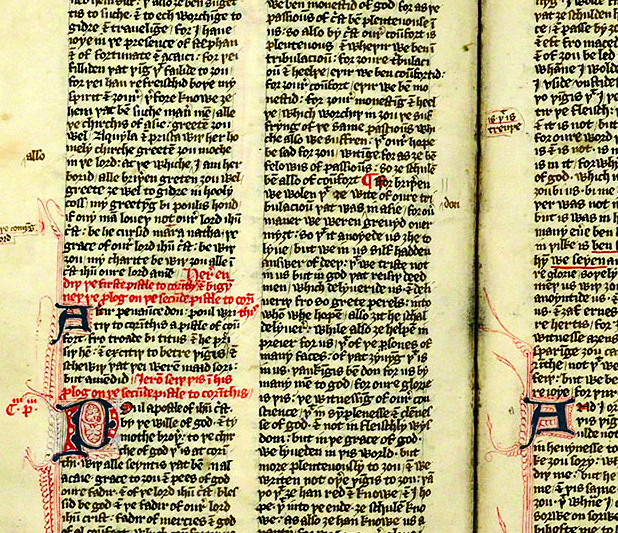
The church had gone further than tradition—it had made the restriction law. The 1408 Constitutions of Oxford forbade any new translation of Scripture into English without church approval. Reading such a version in your mother tongue could mean imprisonment or execution.
The reasoning? It was said to be safer for the people to hear the Bible in Latin and not understand it than to risk errors in translation.
Court records from the 1520s show that simply owning an English New Testament could be presented as proof of heresy. The book itself — not just the ideas in it — was considered criminal.
This was not an idle law. By Tyndale’s day, followers of Wycliffe, known as Lollards, were still being prosecuted, and some were burned at the stake with their English Bibles hung around their necks as evidence of their heresy.
This control gave the church immense authority.
Religion was mediated entirely through its hierarchy, sermons, ceremonies, and confessions. Scripture, the fountain of truth, was fenced off from the common man. Tyndale grew up in a world where Amos 8:11 felt like a living reality: a famine “of hearing the words of the Lord.”
Hungry for truth
At around the age of 14, Tyndale entered Magdalen Hall (now Hertford College), Oxford University, where he earned his BA in 1512 and MA in 1515.
Oxford was one of Europe’s great centres of learning, yet for theology students like Tyndale, direct study of the Bible was rare. The Scriptures were approached through the writings of medieval scholars rather than read in their pure form.
It was a strange paradox. Vast libraries, but little living contact with the text itself. Tyndale would later remember this gap with sorrow. He longed for a faith grounded in God’s Word, not human tradition—much as the Bereans “searched the Scriptures daily, whether those things were so” (Acts 17:11).
After Oxford, he may have spent time at Cambridge University, where Erasmus’ Greek New Testament (1516) was stirring fresh interest in returning to the sources of Scripture.
Whether or not Tyndale ever met Erasmus, he breathed in his conviction that every Christian must read the Bible in their own tongue. Erasmus had written that he wished “the farmer at the plough, the weaver at the shuttle, and the traveler on his journey” might have the Scriptures in their hands—a vision that foreshadowed Tyndale’s own daring promise to give God’s Word to the ploughboy.
At Cambridge, reform-minded scholars also gathered at the White Horse Inn, nicknamed “Little Germany,” to discuss Luther’s writings. While it cannot be proven that Tyndale attended, it is very possible that he rubbed shoulders with these men and encountered the spirit of the wider Reformation firsthand.
This context is important: the English Reformation did not begin with Henry VIII’s break with Rome, but with men like Tyndale, who wanted to bring Scripture to the common people.
A Bible in Gloucestershire
By 1521, Tyndale was back in Gloucestershire, serving as tutor and chaplain at Little Sodbury Manor. At some point, he seems to have seen— perhaps even owned—part of the Bible in English. This was probably a manuscript from John Wycliffe’s earlier translation (from Latin into English).
It was at Little Sodbury that the famous dinner conversation with the clergyman took place. This was no passing quarrel. It was the crystallisation of a lifetime’s frustration. Tyndale had seen how the Church’s control of the Bible starved the people spiritually.
His reply that day—to put the Word into the hands of a ploughboy—was both a defiance of Rome and a statement of mission.
Preparing to leave
Tyndale tried to begin his work in England, even approaching the Bishop of London for permission to translate the Bible. His request was rejected. He knew the law, and he knew the risks. Bishop Cuthbert Tunstall, though respected as a scholar, was loyal to Rome and feared the spread of Lutheran influence. His refusal made it clear that no official in England would support such a project.
If Tyndale was to obey God’s call, he would have to do it abroad.
The young man from rural Gloucestershire, shaped by fields, lectures, and whispered Scripture, was about to embark on the work that would cost him his life but change the world forever.
Tyndale’s early years set before us an important question: What will we do with the Book that cost him everything?
He longed not simply that people might possess a Bible, but that they might live by it. The Scriptures he unlocked for the ploughboy lie open before us today.
Will we treat them as a treasure, or let them gather dust, while the ploughboy of Tyndale’s day would have given anything for a single page?
Please note: This article is part of a series found in The Bible Magazine Volume 38. No. 4 ~ 500 Years of the English Bible Commemorative Issue. This magazine is available in the store for purchase.