If you have an English Bible in your hand today, you owe more to the year 1526 than you might realise.
That was the year when William Tyndale’s New Testament was first printed in English from the original Greek—not from Latin, not filtered through the church —and placed directly into the hands of ordinary people. For centuries, such a thing had been illegal in England.
To translate or even read the Bible in your mother tongue was not just frowned upon—it could cost you your life.
Tyndale’s New Testament was also the first English Bible to be printed on a press rather than copied by hand. This meant that, for the first time, thousands of identical, portable volumes could be produced quickly and cheaply. A revolution in both technology and religion.
The printing press was as crucial to the Reformation as the theologians themselves. Without it, Tyndale’s Bible would have remained a marginal, hand-copied text like Wycliffe’s. With it, his translation could flood England faster than the authorities could burn it.
By early 1526, Tyndale had reached Worms, where sympathetic printers helped him complete and publish the first full New Testament in English.
His choice to translate from the Greek was revolutionary.
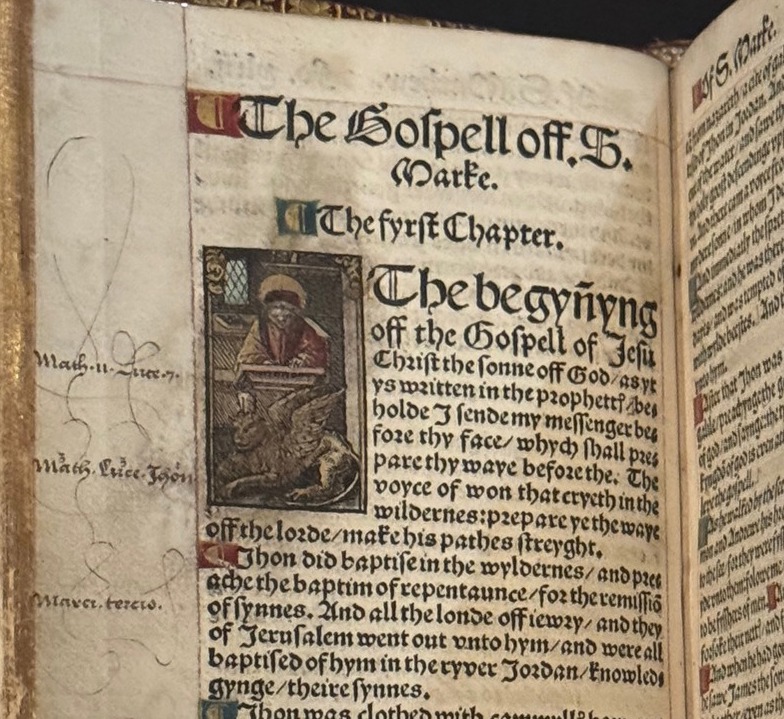
Wycliffe’s earlier version had been translated from the Latin Vulgate; Tyndale, however, went back to the “fountain” of the text, an ideal inspired by Erasmus’s call to return ad fontes— to the sources. He also consulted Martin Luther’s German New Testament (1522), which showed how the Scriptures could be rendered with clarity and force into the language of the people.
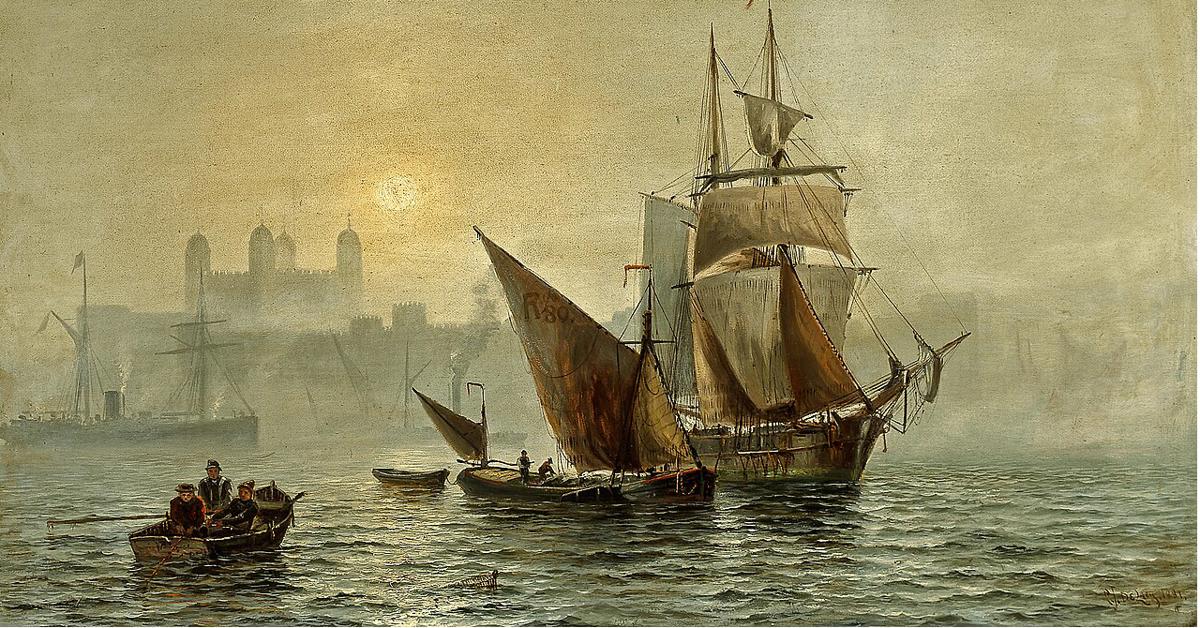
When the printing was completed in 1526, some 3,000 pocket-sized copies of the New Testament rolled off the press— small enough to hide, easy to smuggle. Merchants sympathetic to reform slipped them into bales of cloth bound for London.
From there, they made their way into homes, workshops, and even the hands of priests who secretly longed for reform.
In this way, the commercial networks of London merchants and European traders became unlikely partners in the Reformation, turning the tools of trade into channels for spiritual revival. Some of the earliest copies were intercepted at the docks and publicly burnt, yet enough survived to ignite a hunger that the authorities could not quench.
Five words that shook the church
The most famous controversy over the 1526 edition came from Tyndale’s translation of five Greek words. Sir Thomas More, Henry VIII’s Lord Chancellor, wrote long criticisms of these choices because they struck at the heart of church authority.
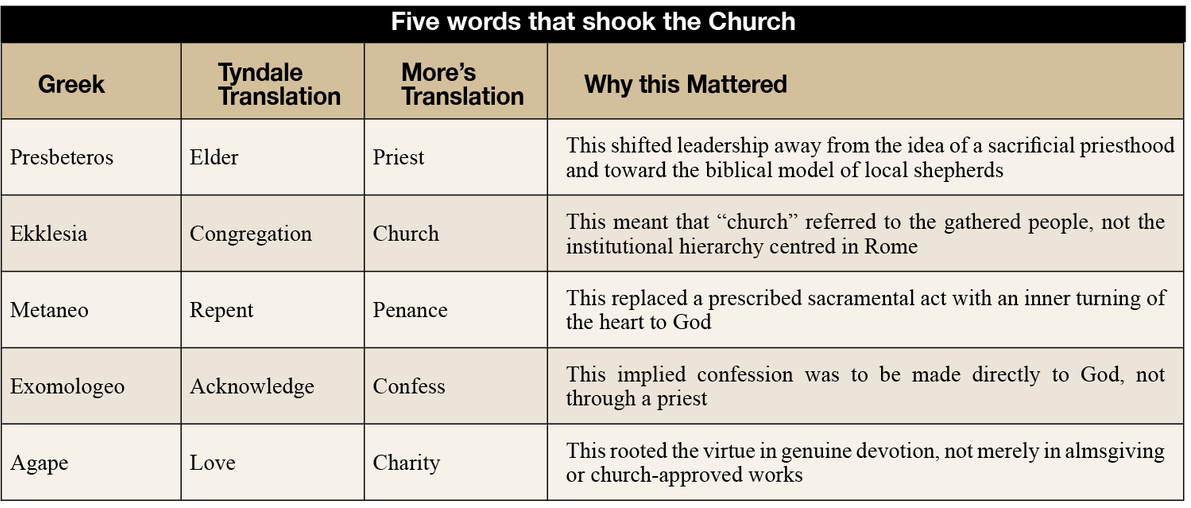
Together, these translations cut the binding rope between salvation and the institutional church. They pointed people to Scripture, repentance, and personal faith in Christ rather than dependence on a sacramental system.
Thomas More accused Tyndale of “wilfully corrupting” the text. Tyndale replied that he had simply let the Greek speak for itself.
Modern scholars still note the power of these choices. Tyndale’s words have shaped the English language itself: “love” over “charity” made the Bible speak with warmth and intimacy, and “congregation” over “church” made the text feel like it belonged to the people.
Even today, these translation choices can be felt in modern English versions of the Bible, many of which still follow Tyndale’s lead rather than returning to the Latin tradition.
Burned by law
Cardinal Wolsey (Lord Chancellor of England and Archbishop of York) and Bishop Tunstall (Bishop of London, later Durham, and leading Catholic scholar) swiftly condemned the 1526 edition.
By October, public burnings of the New Testament were held at St Paul’s Cross in London. Tunstall declared that he had identified “errors” in the text, which largely referred to Tyndale’s reluctance to use traditional ecclesiastical terms.
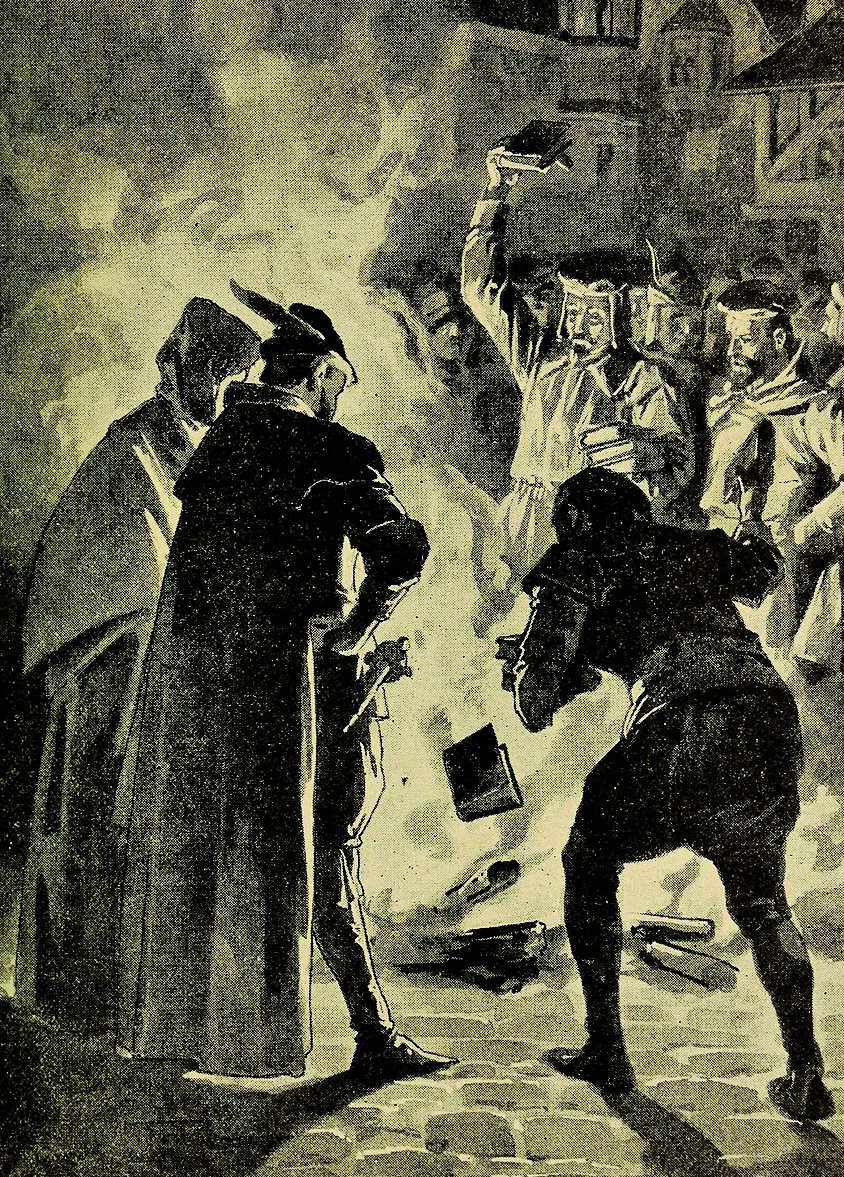
Copies were seized and destroyed, but the effort backfired. News of the burnings only increased demand. The more the authorities tried to suppress the book, the more people wanted to see what was inside.
Possessing Tyndale’s New Testament was dangerous.
In 1530, Thomas Hitton, a young priest who supported Tyndale, was burned at the stake for affirming that Scripture should be in English. In 1531, John Tewkesbury, a London leather-seller, was tortured and executed after being caught with a copy. Foxe’s Book of Martyrs records that Tewkesbury learned much of Paul’s Epistles by heart from Tyndale’s translation before his arrest.
These were not rare cases. Across the country, informants, searches, and trials made it clear: to read the Bible in English was to defy both church and crown.
The debate with More
Sir Thomas More’s published attacks on Tyndale were long, biting and full of sarcasm. More claimed Tyndale’s translation was “craftily devised” to plant heresy in the reader’s mind. Tyndale, in turn, accused More of trying to keep the Word of God locked away.
Tyndale’s replies were calm but firm:
“I call God to record against the day we shall appear before our Lord Jesus Christ, to give a reckoning of our doings, that I never altered one syllable of God’s Word against my conscience, nor would do this day, if all that is in the earth… might be given me.”
For him, translation was an act of obedience to God, not a political stunt.
The contrast between More and Tyndale highlights two competing visions of the church: one rooted in tradition and hierarchy, the other in scripture and the believer’s direct access to God.
Their war of words became a battle over the future of English Christianity.
From 1526 to today
The language of Tyndale’s 1526 New Testament was plain, rhythmic, and memorable. It was designed to be read aloud—in homes, workshops, or fields. Familiar phrases that survive in later English Bibles first appeared here: “the spirit is willing,” “fight the good fight,” “the powers that be.”
Although much of the 1526 printing was lost to confiscation, a few copies survived. One is now in the British Library, showing the small, portable format and the simple Gothic type designed for easy reading.
The 1526 New Testament was only the beginning of Tyndale’s work, but it set the tone for all later English Bibles. Even the 1611 King James Version owes much of its phrasing to him—estimates suggest as much as 80–90% of the New Testament in the KJV echoes Tyndale’s wording.
Tyndale’s 1526 New Testament broke the monopoly of Latin, challenged the theological control of the church, and opened up the possibility that an ordinary ploughman could know more of Scripture than a trained priest—exactly as Tyndale had once declared.
A challenge for Bible students
For Bible students today, the 1526 edition is not just a historical milestone —it is a reminder of the cost of access. Tyndale risked exile, poverty, and eventually his life to ensure that the Word of God could be read without mediation by church hierarchy.
Others risked and lost their lives simply to own or read it.
If the Scriptures are now freely available, in dozens of translations, on phones and in print, the question presses itself: Do we treasure them with the same urgency as those who risked all to have them?
Tyndale’s New Testament was more than ink on a page. It was dynamite under the foundations of the medieval church. What began as a spark in Tyndale’s study erupted into a fire no power could quench.
Please note: This article is part of a series found in The Bible Magazine Volume 38. No. 4 ~ 500 Years of the English Bible Commemorative Issue. This magazine is available in the store for purchase.